Mesembria: The Story of an Ancient City with Two Harbours
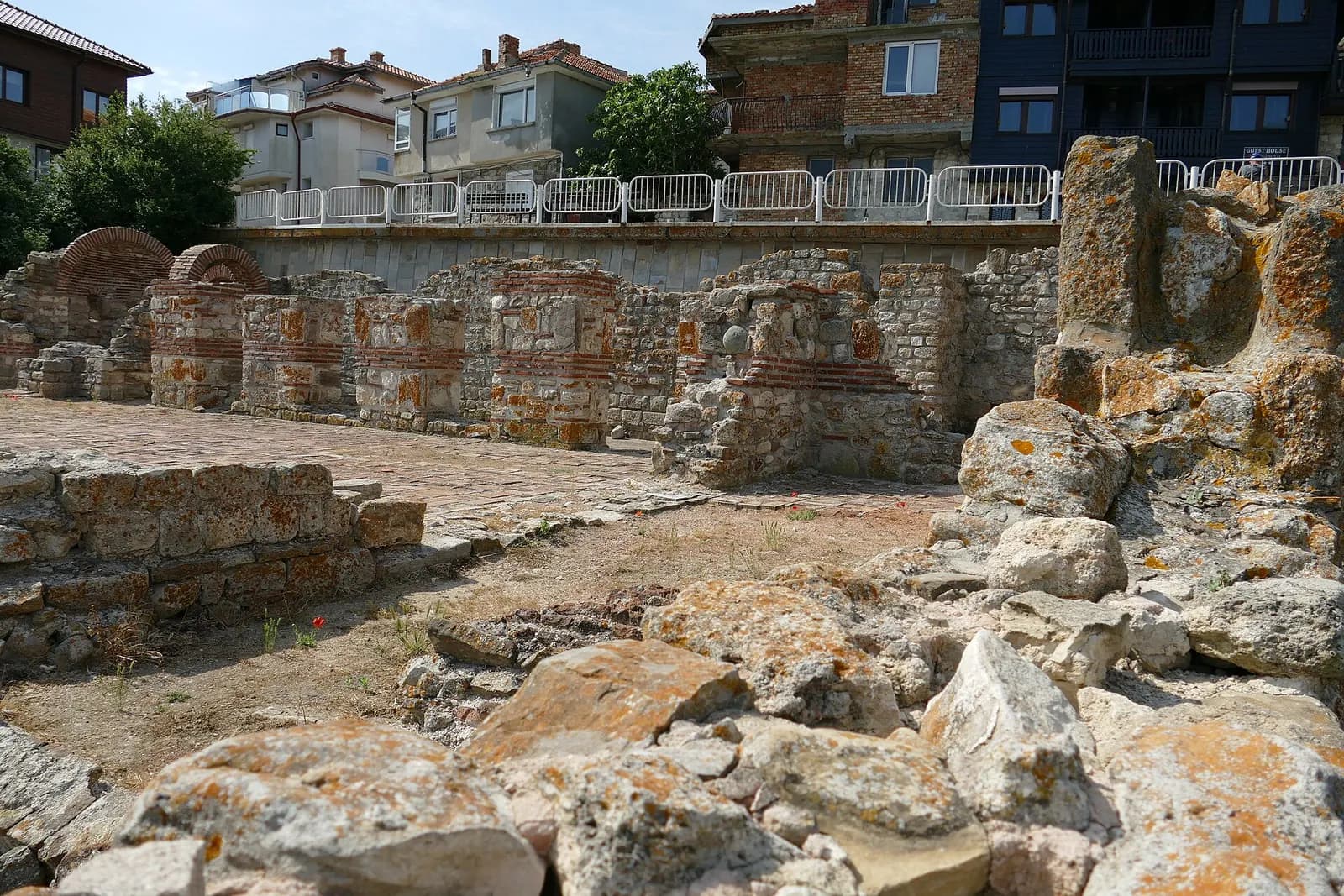
Photo: Kritzolina / CC BY-SA 4.0 — Wikimedia Commons
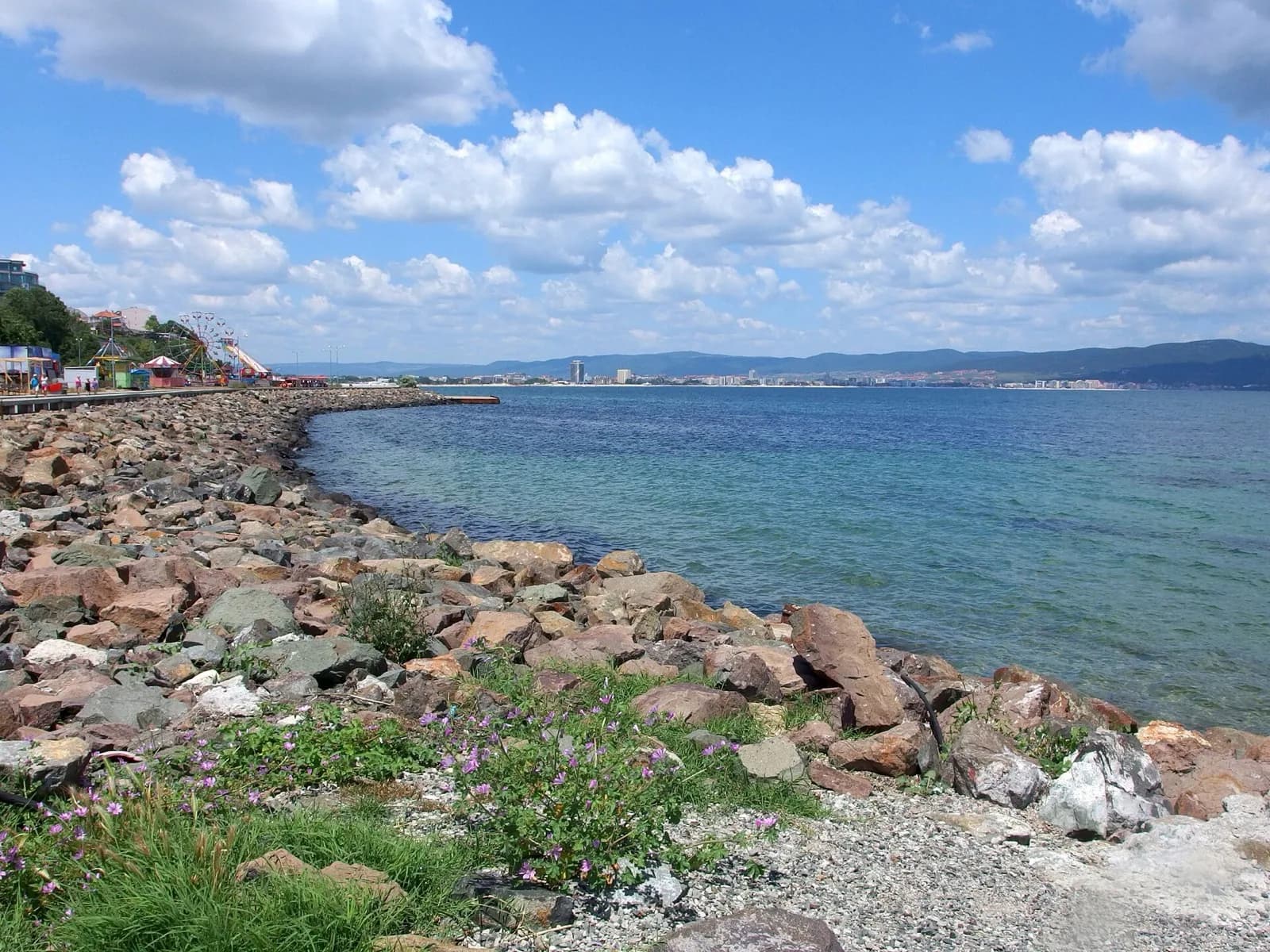
The ancient name of Nesebar is Mesambria; from a Thracian settlement to a Dorian colony, from a Roman city to Byzantine walls, it was a city with two harbours and a rival of Apollonia.
According to Bulgarian Wikipedia, Mesambria Pontica was an old Thracian settlement; with the arrival of Dorian settlers it became a Greek colony, with the Roman conquest in 72/71 BC a Roman city, and today it bears the name Nesebar. Its Greek name is also written as Mesembria; English Wikipedia notes that the form in the Doric dialect was Mesambria.
Thracian Origin and the Meaning of the Name
Citing Strabo, Bulgarian Wikipedia writes that the name derives from the local Thracian ruler Menas (according to other sources, Melsas) and from the word bria, which means 'city' in Thracian; its first form is thought to have been Melsambria, which the Greek colonists changed to Mesambria. The first Thracian settlement was in the northern and north-western parts of today's peninsula; part of it was in time swallowed by the sea. English Wikipedia says that six underwater surveys directed by Lyuba Ognenova-Marinova and carried out between 1961 and 1972 revealed five successive urbanization phases on the peninsula, reaching back to the end of the 2nd millennium BC. On the north-west shore there is a preserved Thracian wall remnant built of rough stone and mud, about 2 m high including its gate; Bulgarian Wikipedia gives around the 8th century BC for this wall.
The Dorian Colony and the Two Harbours
According to Bulgarian Wikipedia, around 510 BC Dorians from Megara, Byzantion and Chalcedon settled here; English Wikipedia dates the Dorian colonization to the beginning of the 6th century BC and adds that an account based on Herodotus says the city was founded by people fleeing from Byzantion and Chalcedon after the suppression of the Ionian revolt. This difference between the sources shows that the founding year is not certain. The city had two harbours, in the north and in the south, carried on lively trade and struck its own bronze and silver coins. It is emphasized that it was the only Dorian colony on the Black Sea coast, the others being typical Ionian colonies; in 425/4 BC it joined the Delian League led by Athens. English Wikipedia mentions the city as one of the five cities that, together with Odessos, Tomi, Istria and Apollonia, formed the 'Greek Pentapolis'.
The rivalry with Apollonia was heavy: according to Bulgarian Wikipedia, Mesambria had been colonized by the Dorians about a century after the founding of Apollonia, and there was fierce rivalry between the two colonies. When the people of Apollonia began producing and selling salt in their second colony, Anchialos, war broke out; the people of Mesambria seized Anchialos and its salt pans, but the war was won by Apollonia, in alliance with Istria.
Roman and Byzantine Walls
In 72/71 BC the legions of Marcus Lucullus took the city; Mesambria was attached first to Macedonia, then to Moesia, and from the time of Septimius Severus to the province of Thrace. English Wikipedia writes that, despite Roman rule, the city kept privileges such as minting its own money. Bulgarian Wikipedia recounts that in the middle of the 4th century BC a wall encircling the whole peninsula was built and was repeatedly repaired by the Greeks and Romans; that after the fall of Rome, in the middle of the 5th century, Byzantine rulers had new walls built using the 'opus mixtum' technique, in which courses of stone and brick are laid alternately. The best-preserved section is the wall around the gate: the gate was single, faced west and was protected on its flanks by two rectangular towers.
According to Wikipedia, Khan Krum annexed the city to the Bulgarian state in 812; the walls were demolished and rebuilt with brick at the end of the 9th century. Repaired in the middle of the 11th century, the walls were renovated for the last time in the time of Ivan Alexander; throughout the Middle Ages the city frequently changed hands in the wars between the Bulgarians and Byzantium.
The Agora, Temples and the First Churches
According to Bulgarian Wikipedia, on the agora rose the temples of Zeus and of Apollo, the city's protector; there were also temples for Asclepius, Hecate, Isis and Dionysus. The Thracians living in the city honoured their own god, the Thracian Horseman (Heros). The city also had a theatre and large baths; English Wikipedia notes that the remains of the theatre have not been found to this day, but that inscriptions suggest it was built at the end of the 4th century BC or the beginning of the 3rd. With the adoption of Christianity many ancient temples were converted into churches: at the end of the 5th century and the beginning of the 6th, the Basilica of Hagia Sophia (known today as the Great Metropolis) was built in the city square, and in the north of the peninsula the Church of Eleousa (the Virgin Mary), called the 'Sea Basilica'. The cover photograph shows the remains of the Church of Eleousa.
- Name: Mesambria / Mesembria Pontica; today's Nesebar.
- Founding: a Dorian colony on a Thracian settlement (the date varies by source).
- Highlights: two harbours, wall and gate remains, the Hagia Sophia and Eleousa basilicas.
- Short glossary: Месамбрия (Mesambriya) is the name of ancient Nesebar, стена (stena) wall.
Related articles: Nesebar Walls: The Gate of the Peninsula; The Churches of Nesebar: The Medieval Language of Brick and Stone; Nesebar: The UNESCO Heritage Peninsula of the Black Sea; Anchialos: The Ancient City Beside the Salt.
Source: Wikipedia (bg), „Месамбрия Понтика” — https://bg.wikipedia.org/wiki/Месамбрия_Понтика ; Wikipedia (en), „Mesembria” — https://en.wikipedia.org/wiki/Mesembria . Accessed: 2026-10-08.
Text licence: The text of this article has been adapted into English from information taken from Wikipedia (CC BY-SA 4.0); it has been summarised and rewritten, i.e. MODIFIED. Under the same licence condition (share-alike), this article is also offered under the CC BY-SA 4.0 licence: https://creativecommons.org/licenses/by-sa/4.0/deed.en. The source pages are listed in the "Source:" line above.