Anchialos: The Ancient City Beside the Salt
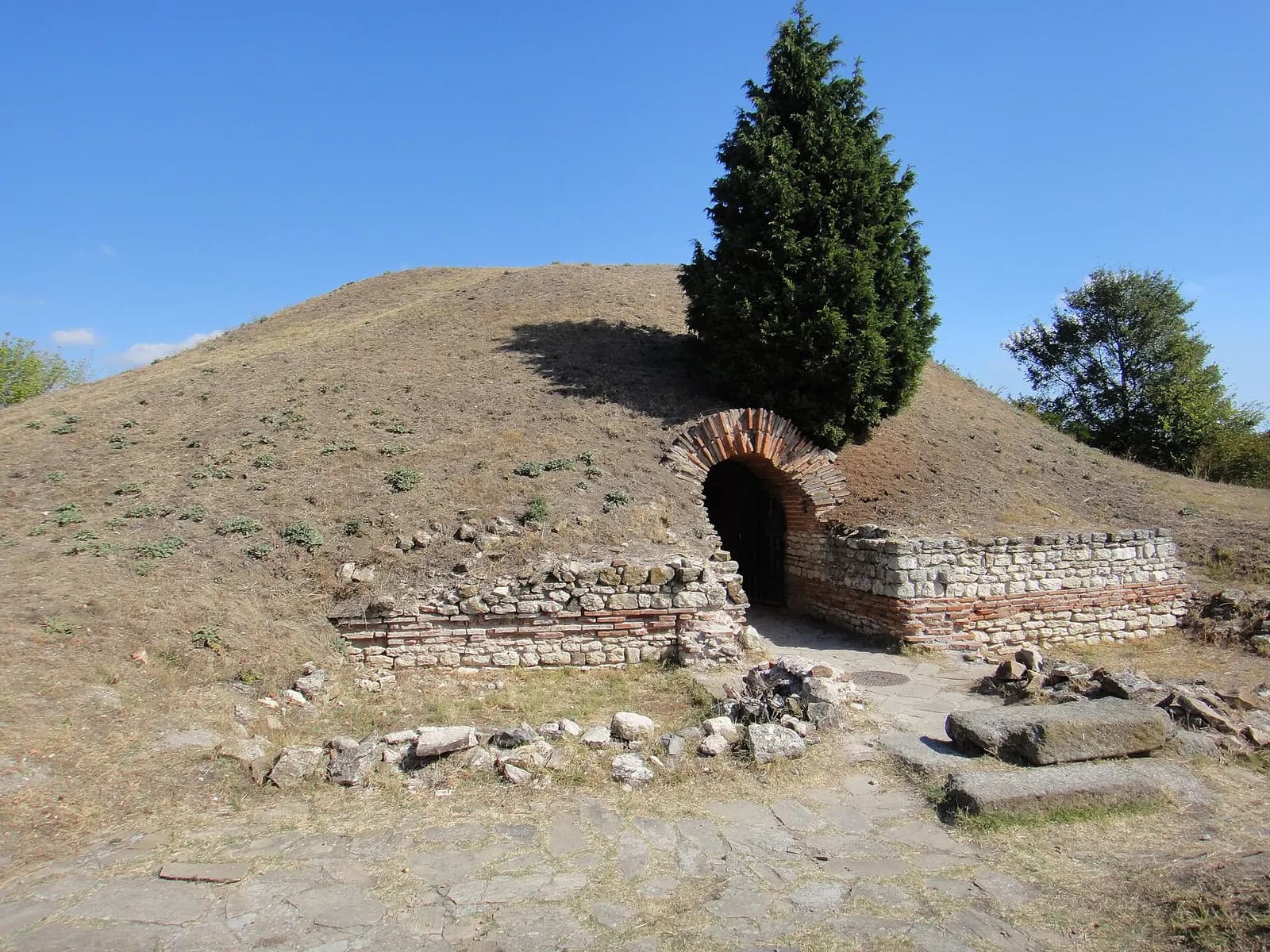
Photo: SashaCoachman / CC BY-SA 3.0 — Wikimedia Commons
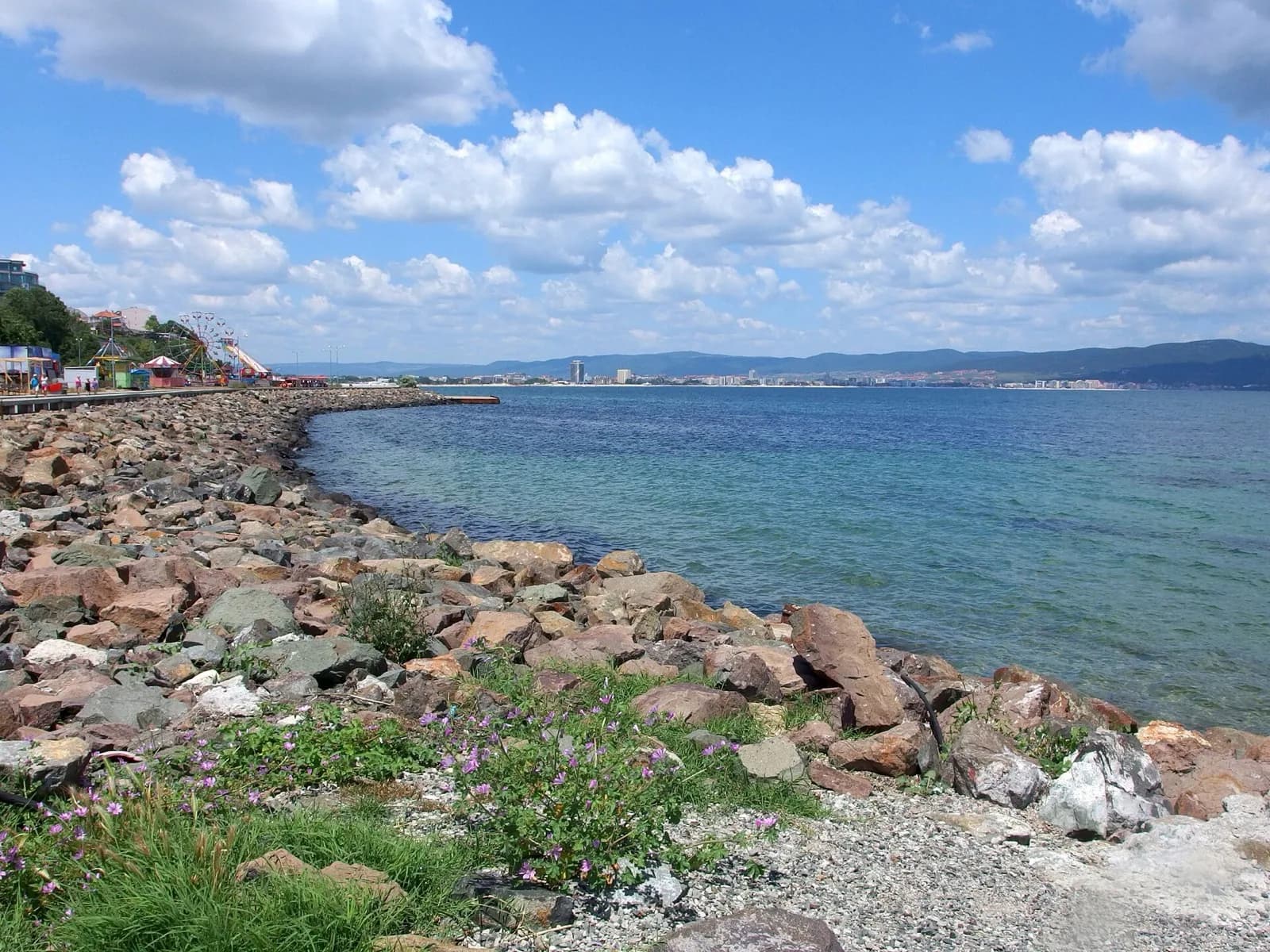
The ancient name of Pomorie is Anchialos; its name is tied both to salt and to the sea, its founding date varies by source, and in the Roman period it was one of the region's large port cities.
According to Bulgarian Wikipedia, Anchialos (Αγχίαλος) is the ancient settlement of today's Pomorie; in antiquity it lay between two Greek colonies, Apollonia Pontica (Sozopol) and Mesambria Pontica (Nesebar). The origin of the name is Greek: Bulgarian Wikipedia explains it as 'near the salt' and ties the name to the importance of salt production in the city's development; English Wikipedia, on the other hand, translates the same root as 'near the sea'.
When, and Who Founded It?
The founding date varies by source. The history page of Pomorie Municipality, relying on written records, says that in the middle of the 6th century BC the people of Apollonia built a fortress called Anchialos at the northern end of Burgas Bay; the same page adds that the exact site of this fortress could not be determined and that the assumption that it lies under the sea to the north-east of today's town stands out. Bulgarian Wikipedia cites the view that it was founded at the end of the 5th century BC as a trading outpost of Apollonia; another view rests on Pliny the Elder's report that a city called Mesa had previously stood there. The article regards both views as disputed. English Wikipedia places the founding as probably in the 5th or 4th century BC. Bulgarian Wikipedia also writes that in the 1980s, about 2 km south of the modern town, the remains of an ancient settlement were found, with pottery fragments ranging from the Iron Age to the Hellenistic period.
War Over Salt
Strabo recounts the war that broke out between Apollonia and Mesambria at the beginning of the 2nd century BC; the main subject of the conflict was control of Anchialos. The Mesambria article of Bulgarian Wikipedia relays it as follows: when Apollonia founded Anchialos as a second, smaller colony and began producing and selling salt there, the people of Mesambria seized the city and its salt pans, then marched on Apollonia; Apollonia, in alliance with Istria, won the war. English Wikipedia also writes that the city was briefly captured by Mesambria, then retaken by Apollonia, which demolished its walls.
A Port City in the Roman Period
In Anchialos, which became a trading centre as an independent city in the 2nd–1st century BC, an inscription from the 2nd century BC shows the existence of a temple dedicated to the Egyptian gods Osiris and Isis. Based on the excavations of the 1960s and 1980s and on written sources, Bulgarian Wikipedia concludes that between the 1st century BC and the 4th century AD the city was larger than Apollonia and Mesambria combined. The same article writes that Ovid in a letter praised the city's walls and harbour, and that on coins struck by Roman emperors from Domitian to Gordian III the fortress is depicted as 'a three-storey fortress with a gate and galleries'. Pomorie Municipality, for its part, relays that in the Roman period one of the region's largest ancient cities was founded at the Palaiokastro locality under the name 'Ulpianon Anchialeon' and that Ammianus Marcellinus called it the 'Great City'. Wikipedia mentions that more than a hundred Thracian mounds have been documented in the surroundings, among them a domed tomb (heroon).
Destruction, Rebirth and Salt
According to Wikipedia, the city was destroyed by the Goths in 270 and, at the end of the third century, was attached to the province of Haemimontus by Diocletian's reforms. In 584 the Avars and Slavs captured the city and demolished its walls; in 590 the Emperor Maurice rebuilt it. The municipality's page writes that the city was destroyed around 740 by a natural disaster and that its ruins are today below sea level, and that the rebuilt city sits on the present ground of the old neighbourhood. In the Middle Ages it changed hands many times between the Bulgarians and Byzantium; in the battle of August 917 (the municipality page calls it the battle of the Acheloos River, English Wikipedia the Battle of Anchialos) Tsar Simeon's army defeated the Byzantine army. Under Ottoman rule it was a kaza centre under the name Ahyolu, and according to the municipality it was one of the empire's two great salt-producing centres in the 15th–19th centuries (the other being Thessaloniki). It was reduced to ruins by a fire on 30 July 1906; in 1934 it took the name Pomorie.
- Name: Anchialos; in Bulgarian Анхиало, today's Pomorie.
- Neighbours: Apollonia Pontica (Sozopol) and Mesambria Pontica (Nesebar).
- Founding: middle of the 6th century BC (municipality), end of the 5th century BC (Wikipedia bg) or 5th–4th century BC (Wikipedia en).
- Cover photograph: the Thracian domed tomb mound in the Anchialos necropolis (Commons caption).
Related articles: Pomorie: Salt, Healing Mud and a Monastery; Central Pomorie: Town Life on a Narrow Peninsula; Lake Pomorie: Salt, Mud and Birds; Mesembria: The Story of an Ancient City with Two Harbours.
Source: Wikipedia (bg), „Анхиало” — https://bg.wikipedia.org/wiki/Анхиало ; Wikipedia (bg), „Месамбрия Понтика” — https://bg.wikipedia.org/wiki/Месамбрия_Понтика ; Wikipedia (en), „Pomorie” — https://en.wikipedia.org/wiki/Pomorie ; Pomorie Municipality, „История на Поморие” — https://www.pomorie.bg/obshtina-pomorie/istoriya-na-pomorie/ . Accessed: 2026-10-08.
Text licence: The text of this article has been adapted into English from information taken from Wikipedia (CC BY-SA 4.0); it has been summarised and rewritten, i.e. MODIFIED. Under the same licence condition (share-alike), this article is also offered under the CC BY-SA 4.0 licence: https://creativecommons.org/licenses/by-sa/4.0/deed.en. The source pages are listed in the "Source:" line above.